Field notes: the week the schedule said framing and the flyover said foundations
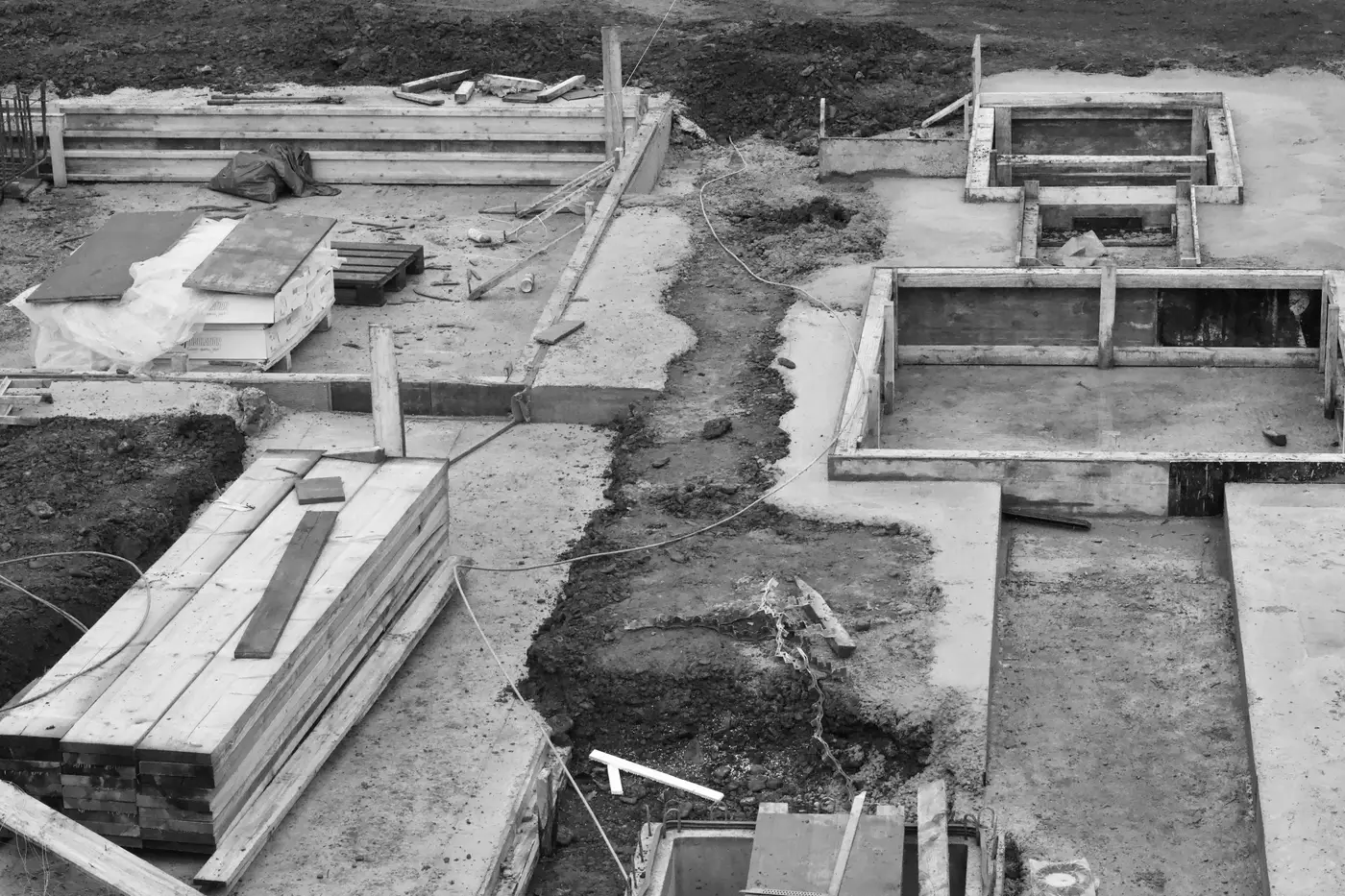
Every job has a week like this. The three-week look-ahead says framing crews mobilize Monday. The schedule of values has the foundation line item at 90% complete, basically closed out, money mostly drawn. Then the flyover comes back and there's still a crew finishing a footing on the north end, formwork stacked where the slab should be cured, and no sign of a single stud.
Most of the time it's optimism with a deadline. A super writes the schedule assuming the rebar inspection clears Thursday and the pump truck shows up on time, and when neither happens, the schedule rarely gets revised. It gets carried forward on faith that next week will absorb the slip. By the time the draw request lands on your desk, the narrative reflects where the schedule assumed the job would be that week, built on plans from two weeks back.
We've watched this pattern enough times to know the tell. It's rarely a dramatic gap, a project that's three months behind dressed up as on-track. It's a week, maybe two, of lag that compounds because nobody's looking at the ground often enough to catch it early. The GC isn't hiding anything. They just haven't walked that corner of the site since the inspection got rescheduled, and the schedule software doesn't know that either.
What the imagery shows, on the week in question, is boring in the best way. Formwork still up along the east wall. A visible gap between the poured sections and the ones marked complete on the drawing. No backfill on the trench that the schedule has already filed under "done." None of it is a judgment call. It's just what's there, photographed from directly overhead at a resolution fine enough to tell cured concrete from fresh.
Catching the discrepancy once is useful. Flying the same corner again the next week tells you something sharper: whether the crew closed the gap or whether it held. A single flyover tells you where the job stands today. A sequence of them, laid against the same schedule baseline every week, tells you whether the trend is closing or widening, and that's the number a lender needs before approving a draw. Foundations at 78% last week and 84% this week is a project catching its breath. Foundations at 78% two weeks running, with no movement between them, is a different conversation, one worth having before the draw clears rather than after.
None of this requires treating the contractor like someone who can't be trusted. Most schedule drift is ordinary friction, the kind that comes from a job with a hundred moving trades and a document that updates on its own cadence, usually slower than the ground does. What changes when you've got a weekly observed record sitting next to the schedule is that the conversation moves from "trust me, we're close" to "here's the footing, here's last week's footing, here's what moved." That's a much shorter meeting.
The site in question did catch up. By the following flyover the slab was poured, the formwork was gone, and framing started the week after that, roughly ten days behind the original line but visible the whole way. Nobody had to guess when it happened. It was just there in the weekly pass, the same corner of the site, the same angle, the gap closing one flight at a time.
If you want that same side-by-side for your own draw schedule, that's the whole idea behind Construction Progress, a weekly drone pass measured against your schedule instead of against the contractor's narrative of it.
Put next week's flyover beside next week's draw request and see what's actually standing on the slab.